How we work
A day in your stores, three weeks to a roadmap, then we stay beside your team as long as it helps.
The Store Walk comes first. Then the Roadmap, three weeks with a fixed scope, before you commit to what comes next.

The Store Walk
Start with a walk.
One day in two of your stores, with you and your team, at the times that matter. Within five working days, a written note: what fresh eyes saw, what travels, and the questions the three weeks would answer. If you go on to the Roadmap, the walk counts as its first day.
What it is
Surgery before the rollout:
fix what breaks between stores first.
Most growing brands don’t need a new concept. When the whole store needs rethinking, we do that too.
- The offer
- A day in two of your stores, then three weeks that end in a decision: what to keep, what to fix first and the next store to build. Then we can stay on beside your team, for the next store, the next format or the whole rollout, or once a quarter as Counsel.
- It is for
- The fashion, jewellery and home brands people stretch for, with a strong team and a moment that matters: a new store a few months in, a concept that has stalled, the next format, or a new leader in their first year. We keep what made you special and operate on what breaks between stores.
- Before
- We agree the stores, the team and, in writing, the questions the roadmap must answer.
- Three weeks
- Walk the stores, check what travels, and build the roadmap.
- After
- The roadmap is yours the day we finish, ready to brief the next store. Then we can stay on beside your team, for the next store, the next format or the whole rollout.
The Roadmap
Three weeks, fixed scope.
Done beforeAs COO of an international retail real estate firm, James coordinated several brand expansions across the US, the UK and Europe.
- Week 1Walk the stores.
We walk a sample of your stores chosen with you, at a busy time and a quiet one, read what you already know, and talk to the people who run them.
- Week 2Check what travels.
We watch shoppers, sort what works from what is luck, and check each idea with your team and with the makers and partners we trust.
- Week 3The roadmap.
With your team at the table: what to keep, what to fix first, the next store to build, the partners to build it and the order to do it in.
See an example roadmap: what the three weeks leave you with.
The scope
What three weeks cover.
- The stores
- A representative sample of your fleet, chosen with you before we start. Enough to see the pattern.
- What you bring
- Plans, photos, sales by store if you have them, and time with the people who run the floor. Your team is welcome at the table throughout.
- What it settles
- What is working, what is luck, and what to fix before the store is built again. Every store has a few of these. The roadmap names them, in order.
- What comes later
- Drawings, builders’ numbers and the rollout itself. In the three weeks, ideas are checked with our makers and partners; firm numbers come with drawings.
- From roadmap to prototype
- The roadmap ends with the next store to build and what changes in it. If you want us to, we stay on through the prototype and the store book every new store follows.
- Agreed before Week 1
- Which stores, who we talk to, what you send, and the questions the roadmap must answer. If any of that changes, we agree it in writing first. The retainer is shaped from the roadmap: how often we are at your table, and who from the studio stays.
Your first store abroad
Your first store in a new country: one more week to find the local architect, builder and makers.
For a first store in a new country, the Roadmap runs four weeks. The extra week finds and briefs the local architect, builder and fixture makers, and reads what the landlord, the lease and the permits ask of the store before you commit.
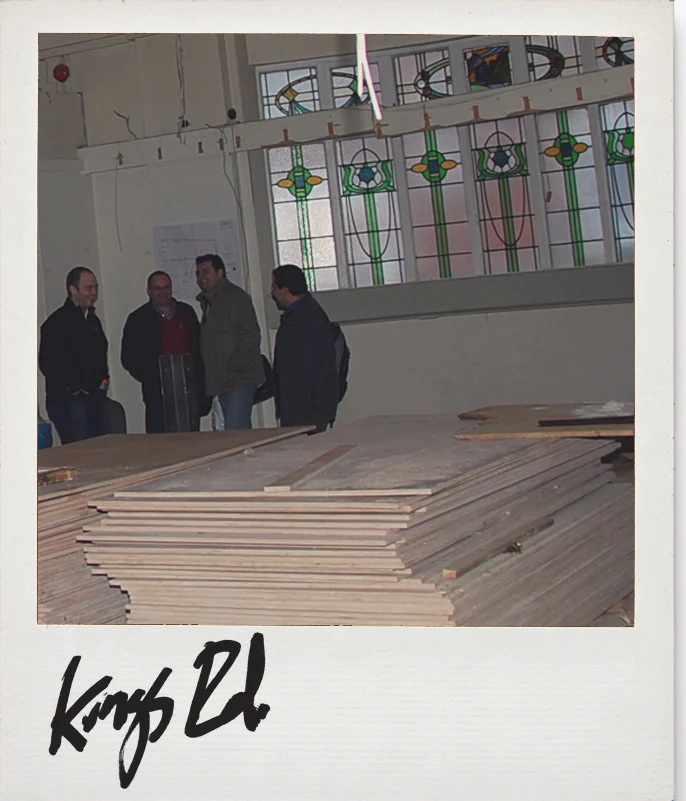
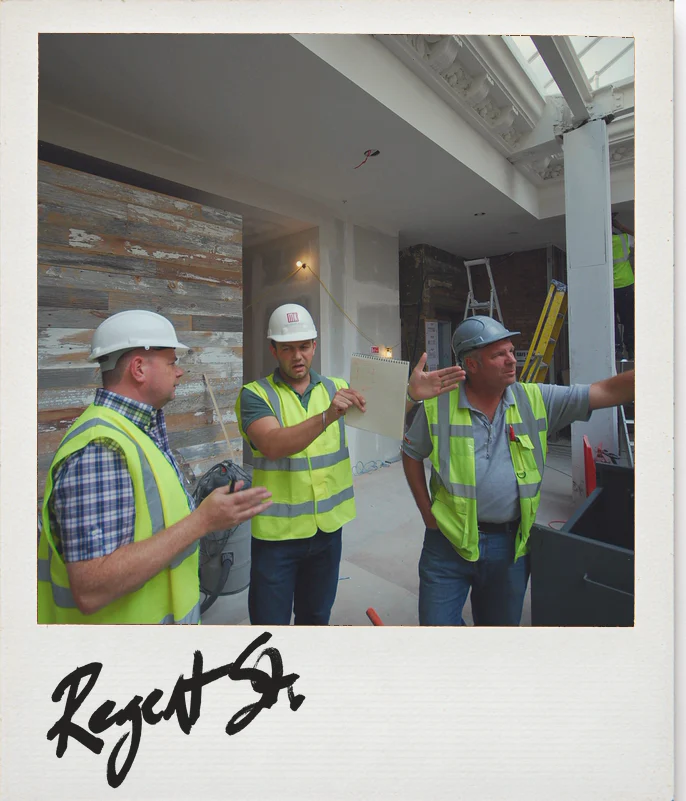
Done beforeJames led the store design team for Anthropologie’s launch in Europe, on Regent Street, and facilitated Free People’s move into Japan through a partnership.
- Going to EuropeWhat changes in Europe.
- 230 volts, and a CE mark on every light and powered fixture
- Finishes retested to European fire classes
- Narrow, deep, multi-floor shops where the frontage sets the rent
- Permits that take months, and strict rules for old buildings and signs
- Going to the USWhat changes in the US.
- Every light listed by UL or ETL. A CE mark is not enough
- Fabrics and finishes tested to US fire standards
- Accessibility measured to the inch, from the counter to the fitting room
- Landlord design manuals, required contractors and fixed review dates
A store that passes inspection in Dallas can fail in Amsterdam, and the other way round.
Staying on
Staying on, beside your team.
We stay at your table as often as your team wants us, through the next store, the next format or the whole rollout, up to a seat on your leadership team. After every visit you get a short note: what was decided, what comes next and who owns it.
Done beforeFrom the in‑house design studio James was tasked with building and leading, and its team: more than 200 store environments across URBN’s brands, no two alike, each one coordinated with an outside architect of record, engineers and makers.
- 01 / The storeBuild the prototype.
The prototype store, its fixtures and the store book every new store follows.
- 02 / The buildBuild it anywhere, at the right cost.
A kit of parts and a cost target for every site, with makers found and tested.
- 03 / The rollout
The right partners in each market, from the first site visit to opening day.
- 04 / Your teamMake your team stronger.
We work alongside them and leave them with everything we learned.
Counsel
Counsel, four times a year.
Each quarter you bring one store question: a site, a format, a plan, or a store that isn’t working. We answer it in writing and talk it through at your table. It runs a year at a time. If you move to the Roadmap within the year, we take one quarter of Counsel off the Roadmap.
The team
A team picked for your project,
from people James has worked with over 27 years.
For each project we cast a design and build studio: designers, architects, engineers, lighting people and makers, each chosen for this problem. Most have worked together before. On operations it is often Josh Sparks of Together the Studio, former CEO of Thom Browne and the founder of THR1VE. You agree the team before Week 1.
Good people do their best work as invited peers, on one hard problem, against a date. They sharpen each other, and they enjoy it.
James is the one constant. He works beside your team, writes the brief with you, helps you set the standard and makes the case for the idea to the people who decide. When the stores open, the studio goes home and the next project gets its own cast.
Who builds it
- Architect of record
- Permit expediter
- Engineers
- Lighting
- Fixture makers
- Contractors
One studio on your sideJames and the studio
- Your CEO
- Finance
- Real estate
- Operations
- Brand and marketing
- Your store team
Who decides
The brief, the standard, the case for the ideaThe store, built as imagined.
Questions
Is the Roadmap the right tool for your challenge?
- What exactly does the Roadmap do?
- It settles what to keep, what to fix first and the next store to build, before you commit to the next round of stores. It ends in a roadmap your team can act on the following week.
- How does it work?
- Before Week 1 we agree the stores, the team and the questions the roadmap must answer. Then three weeks: we walk your stores, check what travels with your team and our makers, and build the roadmap with you at the table.
- What is the timeline?
- Three weeks from Week 1 to the roadmap, four for a first store abroad. That gets you the plan. Putting the team together and starting the work takes more weeks after that, and the rollout runs as long as you need us.
- Can we start smaller?
- Yes. Start with a Store Walk: one day with you in two of your stores, and a written note within five working days. If you go on to the Roadmap, the walk counts as its first day.
- Can we start with the rollout?
- Yes. If your next stores are already under way, we can join your table now, and the first weeks do the work of the Roadmap.
- Who needs it?
- Founders and CEOs of the fashion, jewellery and home brands people stretch for, with a strong team and a moment that matters: a new store a few months in, a stalled concept, the next format, a new leader, new money or a first store abroad. We go where your stores are, in the US, Europe and beyond.
- We already have a store design team.
- Good. Steel sharpens steel. We work beside them as a collaborative force multiplier, bringing in the studio’s resources when and where necessary. What outside eyes add
- Our CFO will ask about payback.
- They should. The roadmap is written for them too: a cost target for each change, the numbers each decision rests on, and a stop line agreed before anything is built. A store also does work its own four walls don’t count, from online sales nearby to returns. The sources are on the Why page.
- Does it work beyond stores?
- Yes. The same work applies to restaurants, hospitality and mixed‑use places. James’s career includes the Vetri Family of Restaurants, UO’s Space Ninety 8 and Space 24 Twenty, and Devon Yard: mixed‑use spaces and ground‑up development.
Contact
Tell us about your next stores.
Answer three quick questions: how many stores you have, what’s on the table now, and where it hurts. We reply within two working days.